The Grounds
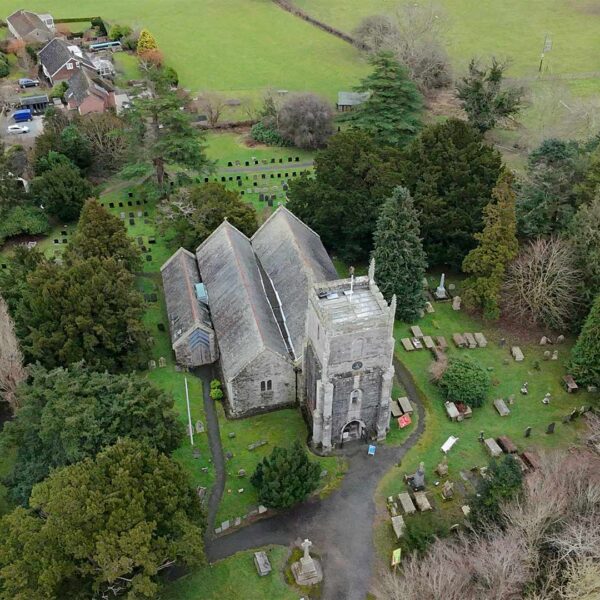
2 acres of churchyard
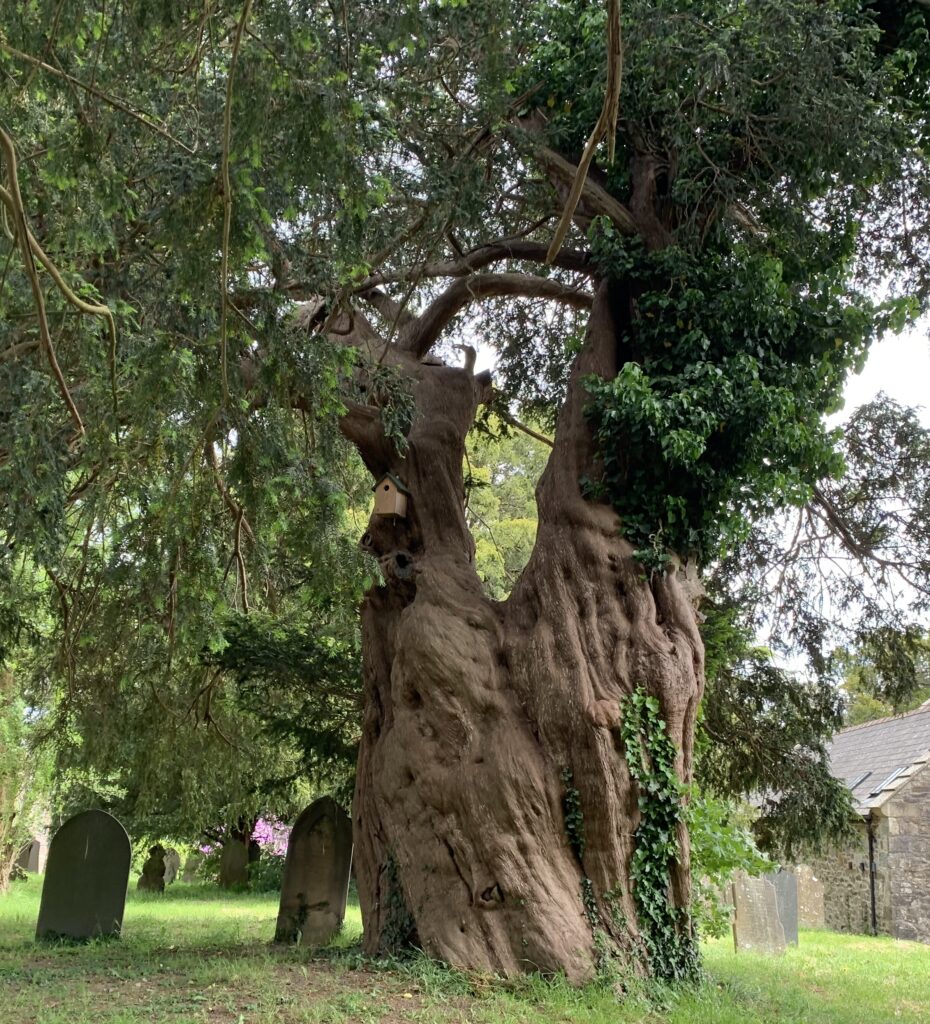
1,000+ year old ancient Yew Trees
Monuments, sundials and evidence from the Civil War
Ancient Yews, traditional marks & 31st February
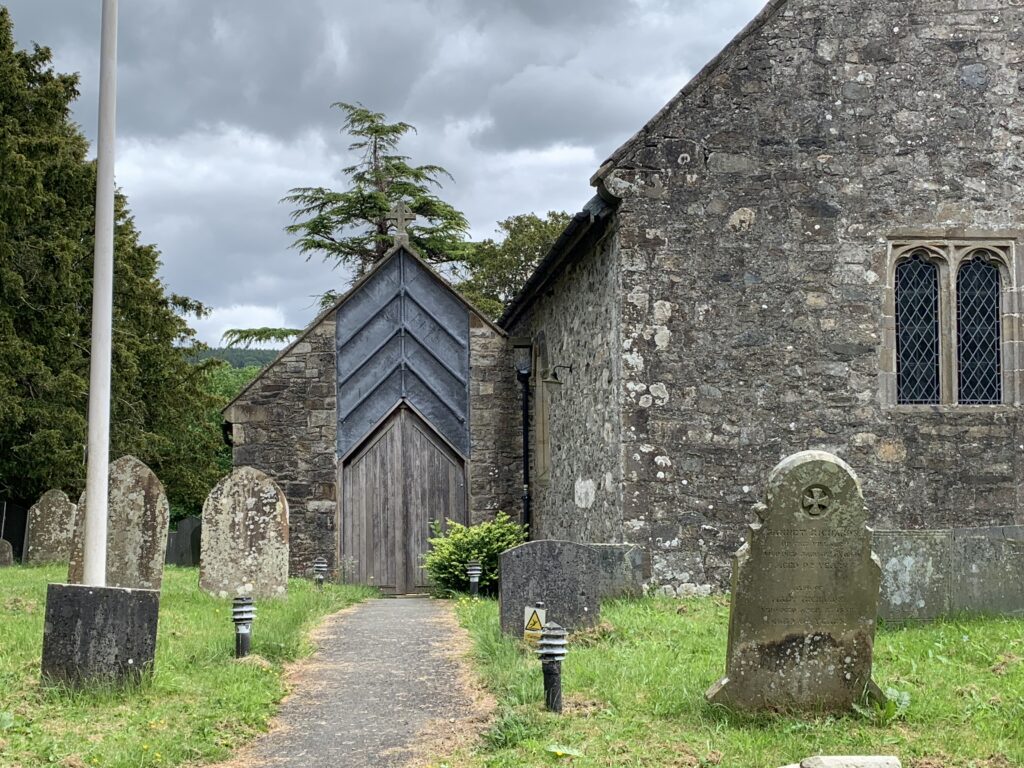
The large churchyard of about two acres contains eight ancient yew trees, the oldest estimated to be over 1,000 years old. There are some very old graves, probably dating from the 16th century, with two “skull and cross bones” stones lying near the south door. These may have indicated that the person died of leprosy, a disease that was greatly feared at the time.
There is evidence that the shape of the churchyard has changed at some point during the late medieval period. Previously the churchyard would traditionally been circular. and surrounded by a wall to keep the wild animals out and as a demarkation of the sacred area.
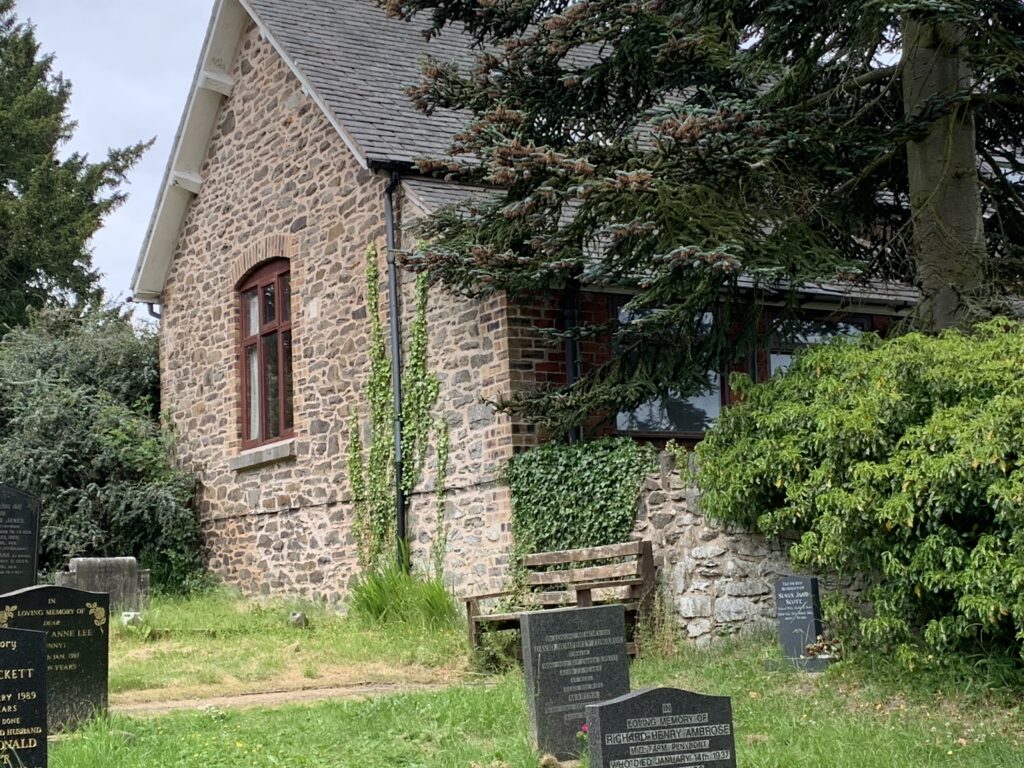
In 1823 the church yard was reduced in size on its northern boundary to allow the building of a National School.
Near it is a cross commemorating a man who allegedly died on the 31st February – the mason having made a mistake. Within the churchyard are other intriguing elements such as inscribed footprints that were traditionally done when the person was leaving to emigrate, meaning that they were leaving their make and would sometime return.
The squire of Moelfre
A sundial bears the inscription Ex dono Johannis Lloyd – 1717 – Ut hora, sic vita (As with hours, so with life) recording the gift of the squire of Moelfre. The broken shaft on which the sundial stands was originally part of a medieval preaching cross.
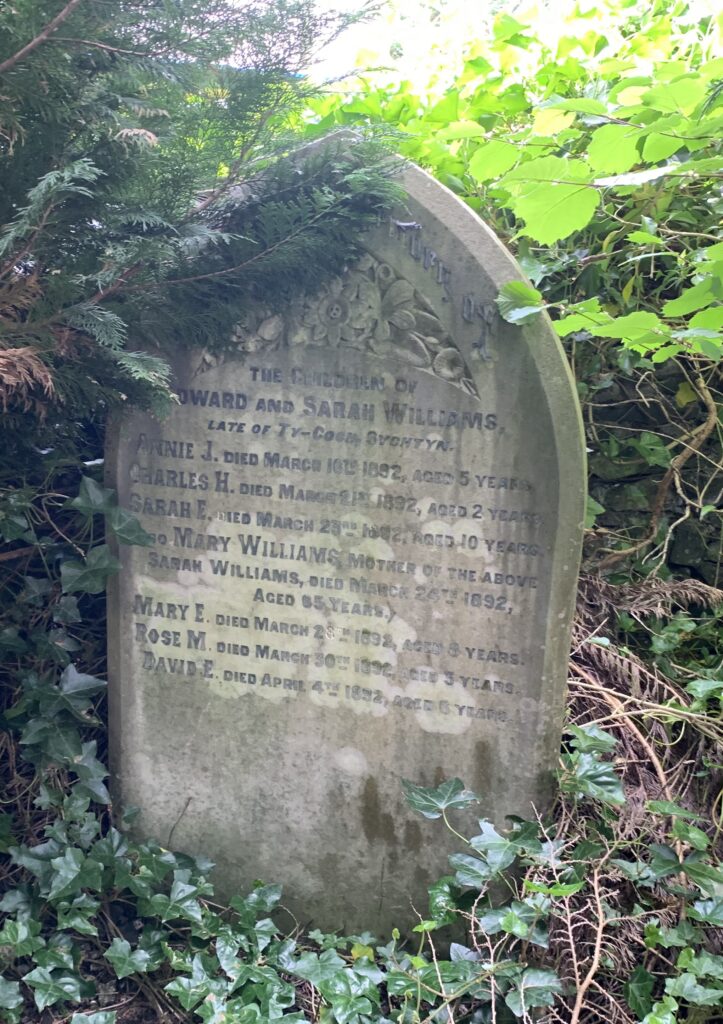
Close to the churchyard wall, near to the back of the inn is a poignant memorial to six children and their grandmother who died of diphtheria within a few weeks.
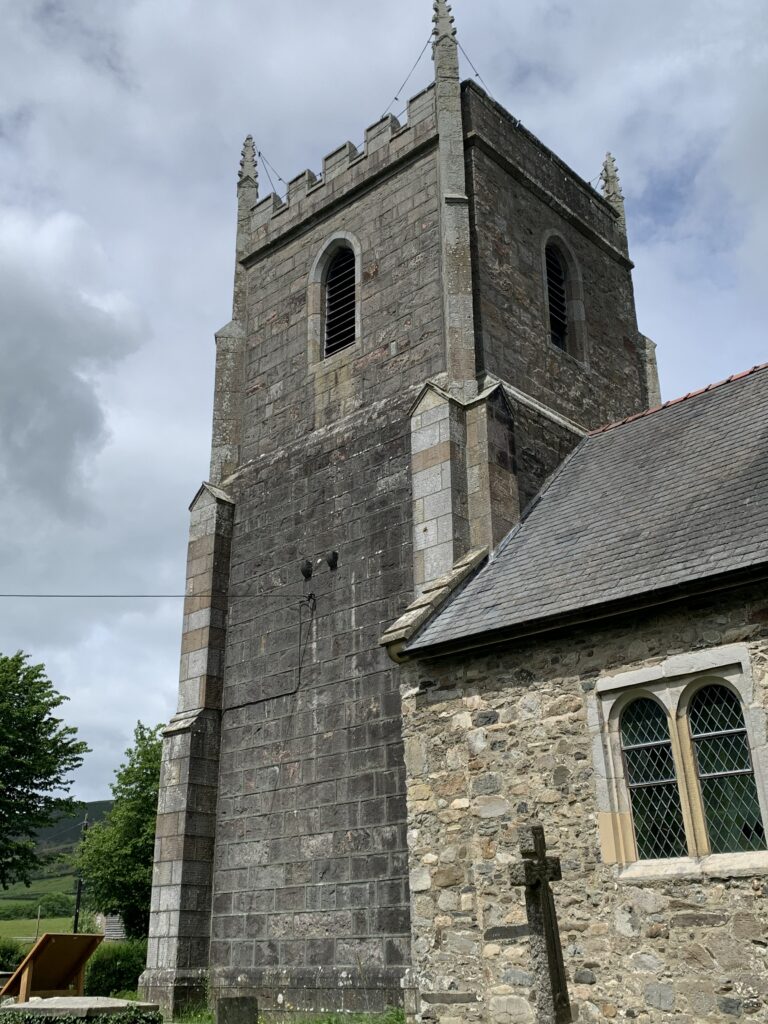
The graveyard was used by the living as well as the dead. In common with most churchyards in Wales, Llansilin’s was used for games, particularly one usually referred to as “Fives”.This was a version of handball popular in the 17th and 18th century.It was played on a plain wall of a church so avoiding the windows. It was played on the north side of the church. When some plaster was removed form the north wall a distinct red line was discovered on the stonework.
When Sunday games were practised in the churchyard they were restricted to the north side the church. Superstition had it that this was where evil spirits were most likely to access the churchyard – the reason why it was not favoured for burials.
In the churchyard there are many 19th century graves, including the so-called “Diphtheria Graves”, that hint at the pain caused by premature death from diseases that could be treated in the 19th century.
From an artistic point of view, Llansilin Church Yard has some fine examples of letter cutting on slate from the late 18th and early 19th century.
The south door – Civil War
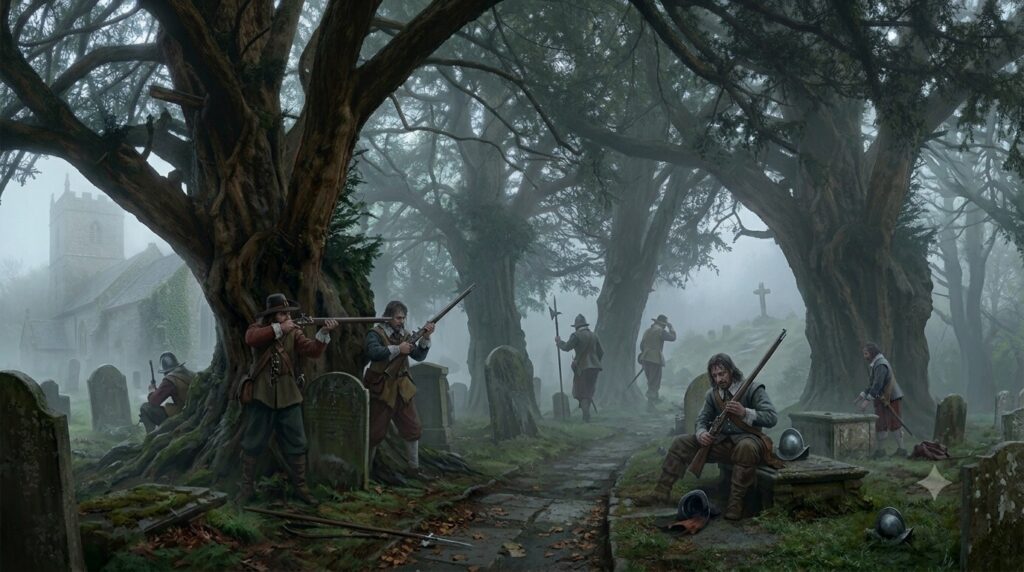
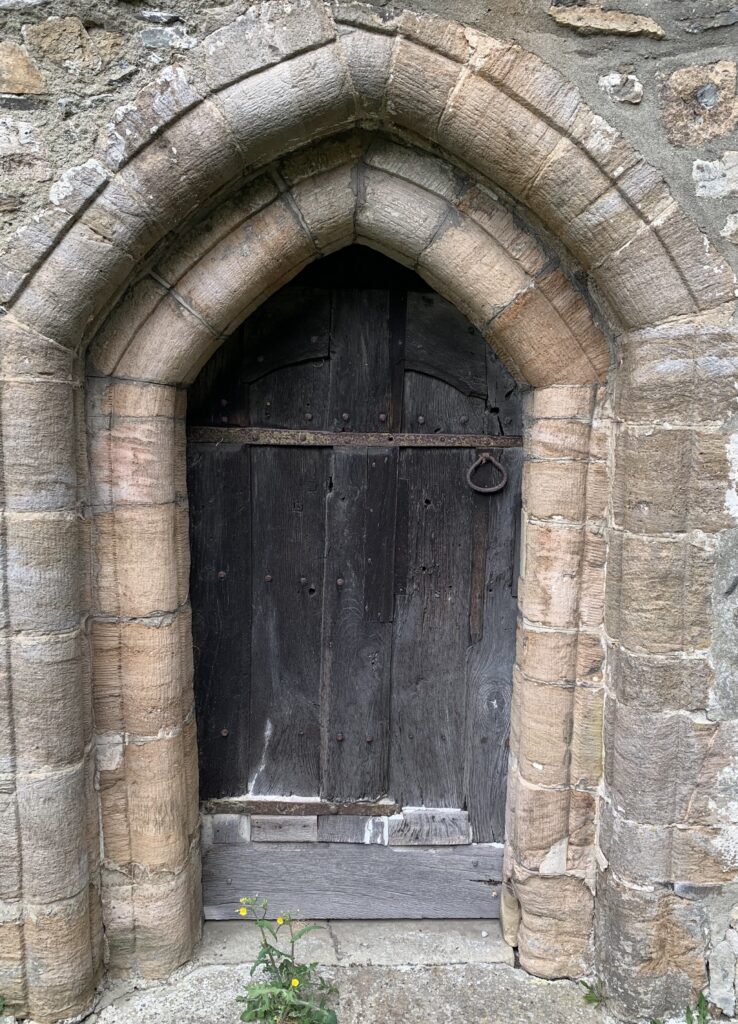
The Church fabric was affected by the national conflict during the civil war. When the parliamentary soldiers tried to fortify themselves inside the church, the east window along with the rood screen and statue of St. Silin were destroyed. The Royalists forces tried to flush them out and bullet holes from the attack can still be seen in the timber of the old south door.
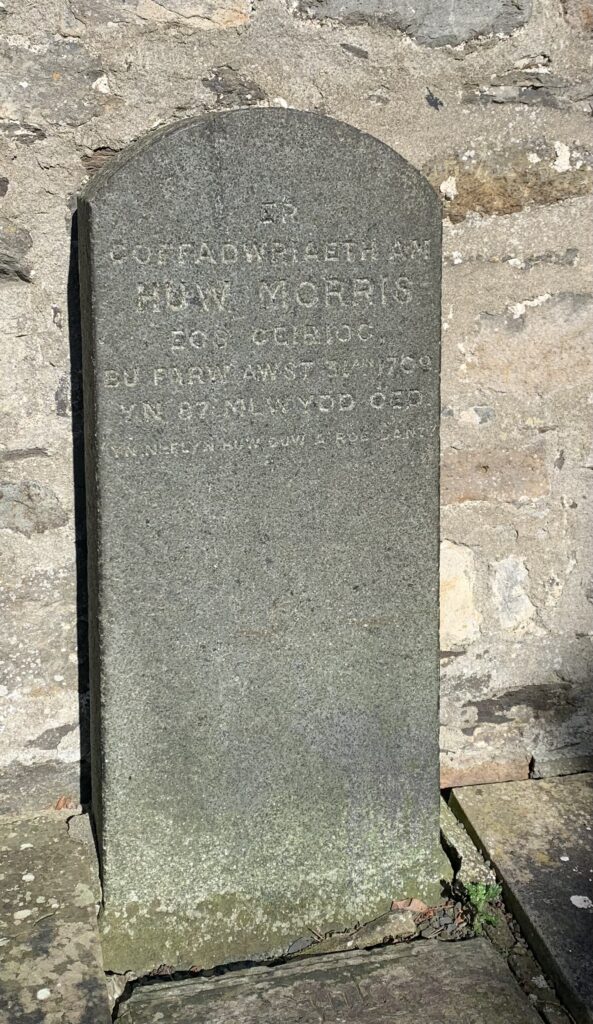
Along the south wall is the memorial Stone of Huw Moris, a famous poet am
and song writer. He was born in 1622 near Llansilin and lived through the reigns of six monarchs. Huw Moris was a Church Warden of St. Silins for many years and he is commemorated in the church with a large stained glass memorial window as well as a lancet window above his newer headstone, which replaced the one below it that was badly weathered. The Welsh words at there bottom of the inscription states * In Huw’s Harp God gave a string”
Fives, Quoits & an old tithe barn
Ball games such as fives and quoits used to be played against the north side of the church and the evidence until recently was shown by a dull red mark. Also the lines of the former doorway into the north aisle can be seen in the stone work.
Is is thought that at an earlier period the churchyard extended to the other side of the road, adjoining an old tithe barn which once stood there and demolished in 1910, now replaced by a modern timber-clad house.